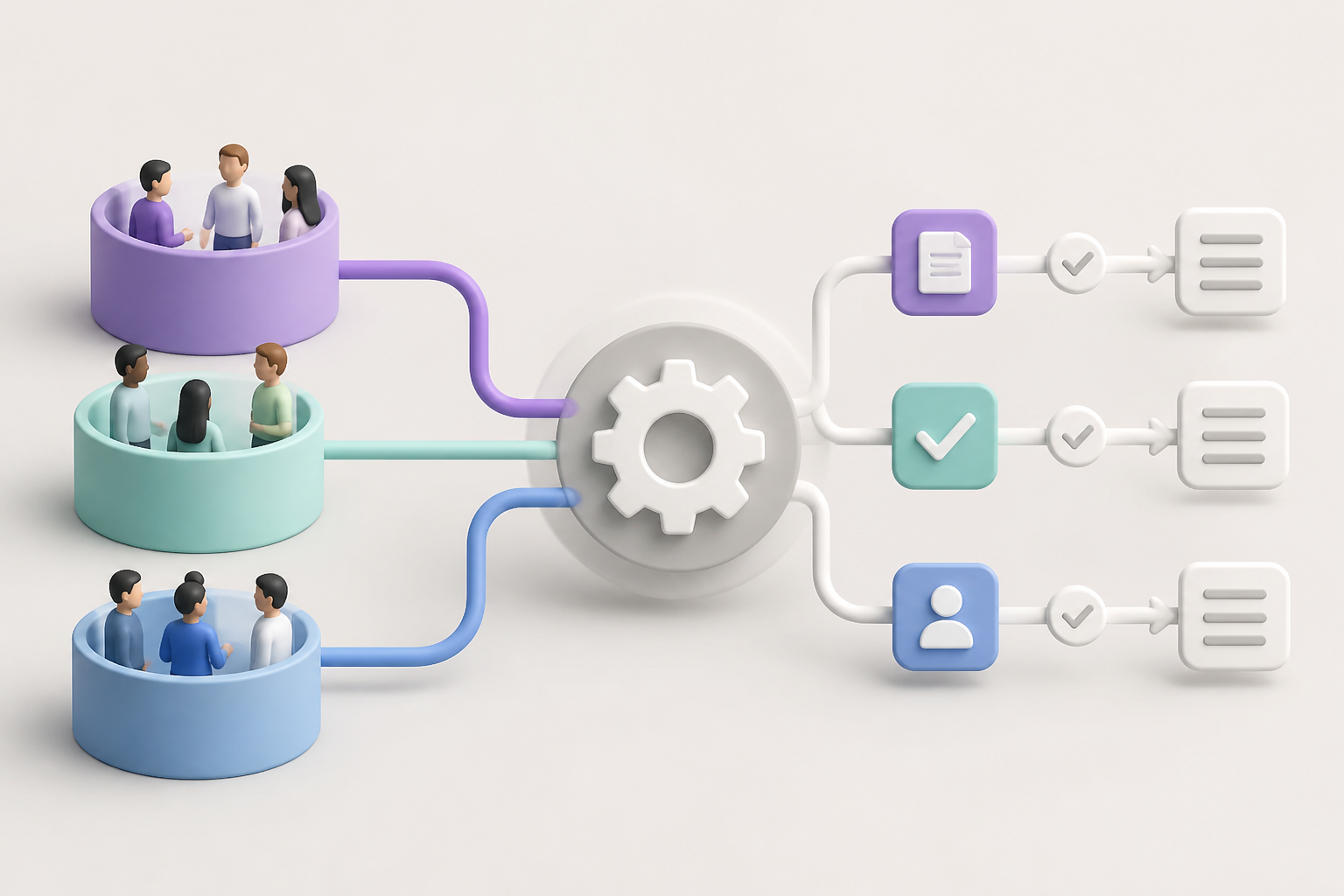
Modern businesses often struggle with departmental silos, where critical information gets trapped between teams, leading to delayed projects and miscommunication. While individual task management helps, true organizational efficiency lies in how well different departments hand off work to one another. Implementing automated workflow templates designed specifically for cross-functional collaboration is the key to breaking down these operational barriers and keeping projects moving seamlessly.
Bridging the Gap Between Marketing and Sales
The transition of a prospect from a marketing lead to a sales opportunity is a notorious friction point. By utilizing collaborative automated workflow templates, organizations can ensure that no lead falls through the cracks. When a lead meets specific criteria, the template immediately assigns a follow-up task to the sales team, uploads the relevant lead data to the CRM, and sends a notification via chat apps, completely eliminating manual data entry.
Streamlining Creative Approvals and Operations
Another common bottleneck occurs between creative teams and operations or compliance. When a designer finishes an asset, getting feedback shouldn’t require endless email threads. An automated task management workflow can instantly route completed files to the compliance officer for review. Once approved, the system automatically archives the asset and alerts the social media manager that it is ready for publishing, maintaining a strict but effortless audit trail.
Building Your Collaborative Framework
To successfully implement these blueprints, start by mapping out the exact touchpoints where departments intersect. Define clear triggers—such as a status change or a form submission—that will launch the next phase of the project. Using pre-built automated workflow templates allows your team to skip the complex setup and deploy reliable, repeatable processes that everyone can understand and follow from day one.
Ultimately, cross-departmental automation is not just about saving time; it is about building a cohesive work culture. By replacing manual hand-offs with predictable, automated systems, you reduce friction, eliminate human error, and allow your teams to focus on high-value creative work rather than administrative overhead.
Leave a Reply